All About Worm Composting

Red worms, Composting, Worm bin & Vermiculture

Blue Worms For Sale – Free Delivery Islandwide

BLUE WORMS FOR SALE

FREE DELIVERY ISLANDWIDE

CALL US TODAY: +65 8330 1780

  • Compose any waste into fertilzers/worm castings!
  • Newspapers, Vegetable/fruit peels, leaves,tea bags etc
  • Suitable for Singapore climates and HDB homes

Price: 500g for S$125

CALL 8330 1780

Worm Diet

How do we keep our worms happy and healthy? The saying goes, “An Apple a day keeps the doctor away” but in this case, ” An apple a day, keeps a worm happy :)”

One of the most common misconceptions are that compost worms are able to compost any organic material. This is however not true because worms, just like us humans, are also living beings and their diet must be carefully taken care.

I normally feed my worms vegetables and fruit peels. This is by far the best way to keep them alive and happy! Vegetable left overs are an excellent diet for the blue worms as they do not attract fruit flies. Almost all vegetables are suitable for the worms. Tubers such as onions and garlic,however, are not suitable to be fed to the worms

Fruits on the other hand, is otherwise. Acidic fruits such as orange peels, pineapples, lemon and etc are a big no no for the worms. This is because worms dislike them and will not compost the above. Apples is a good choice and trust me, the worms love the apple cores the best. Watermelons on the other hand, provide a good amount of water content in the worm bin.

Other daily wastes such as coffee grinds and tea bags are also suitable to be fed to the worms. Coffee grinds however must be left isolated for a week or more for the alkaline content to be reduced. Cooked and oily food should be avoided at all means. This is because the worms do not compost the cooked food and it will most likely kill them. Besides that, feeding cooked food to the worms encourages maggots and other pest. This will also make the food rot and eventually emitted a very foul smell. You probably don’t want your backyard to stink!

Remember, a happy worm is a happy you ;)

Worm Composting Survival Guide Part 2

Continuing from the previous article,  another reason why worms tend to crawl out of the compost bin is due to,

2) Lack of food

Common assumption: These compost worms are able to feed on the bedding material and hence we don’t need to feed them any waste.

Solution: Composting worms are just like any other living organisms. They require the basic necessities such as air,water and food. Yes it is true to a certain extend that the worms are able to survive on the bedding material for a few days but this doesn’t give us an excuse not to feed them. After all, it’s an easy task. Remember, do feed your worms regularly with appropriate food :)

3) Bedding material too damp/dry

Solution: If the bedding material is too damp, drill tiny holes at the bottom of your compost bin to drain the excess water. If you do notice that the worms tend to get a little more active during rainy days? This is because their sensitive nature is able to detect the slightest change in humidity and temperature.

If bedding material is too dry, just sprinkle some water over them. You don’t want to drown your worms and upset their environment do you?

Coming up next, what to feed and not to feed your worms!

CALL US TODAY: +65 8330 1780


Composting Worms Survival Guide

We have been acquiring a lot of enquiries recently on how to handle composting worms and the next few posts will be a short and quick reminder on how we keep our worms healthy and alive!

One of the common feedback we often get is, ” My worms seems to be very crawling out of my composting bin often, what should I do?”

First things first, we must always try to understand our worms. Worms are living creatures and they will tend to get uneasy if their environment is not suitable/good. Remember they are sensitive creatures and should be given adequate attention as well.

On of the main reasons why the worms keep crawling out of their habitat is because their environment is not suitable. This could due to

1) Lack of oxygen in the compost bin.

Assumption: Like all living organisms, worms need oxygen to survive as well. Some may debate that they are able to live under the soil hence the need of oxygen is less which  is often a misconception. Worms need a similar supply of oxygen as we do. However, they are able to extract their oxygen efficiently from what we would find to be a very uncomfortable environment, like soil. This is because  their blood’s haemoglobin has a much greater affinity for oxygen than humans and hence, able to cope with much lower oxygen levels.

Solution:Drill more holes on your compost bins to create more ventilation and aeration in your compost bin. You can also put your compost bin in a cooler/windy place. Alternatively, you can place a damp sheet of newspaper/cloth, something organic, over your worm bedding

CALL US TODAY: +65 8330 1780


FREE DELIVERY ISLANDWIDE

Vermicomposting- Singapore

Want to do something good with your old news papers instead of the traditional Karanguni style?

Feel wasted with all the left over fruit peels and vegetable scraps?

What about the fresh cut grass and leaves from your garden?

Turn them into worm castings via vermicomposting!

CALL US TODAY: +65 8330 1780


FREE DELIVERY ISLANDWIDE

Can-O-Worms Installation Guide

The Can-O-Worms System is an imported product from Australia and is suitable for the warm and sunny Singapore. Attached is a video on how to install the can-o-worms system. It is very easy and even kids can do it!

CALL US TODAY: +65 8330 1780


FREE DELIVERY ISLANDWIDE

Singapore Garden Festival Special Offer

CALL US TODAY: +65 8330 1780

SGF Special Offer for worm composting system

Compost tea

Compost tea or worm juice (leachate) is another by-product from composting. Compost tea is indirectly collected from a simple filtration system. Normally in a compost bin, there would be holes at the bottom of the bin to enable worm juice to be collected from the system. The red compost worms (Eisenia fetida) consume organic matter which passes through the gut system which is later converted into worm castings. These castings are then brewed in highly oxygenated water to accelerate beneficial microorganisms. The compost tea is then collected at the bottom of the tray or could be poured back into the compost bin for the process to be refined.

So what makes compost tea different from any other liquid fertilizers? Compost tea, or leachate, is rich in good nitrogen fixing bacteria which aids the plants and soil to be rich in nitrogen and rich minerals. One huge advantage of the compost tea is that it is highly water soluble and is thus easily available for the plants. Compared to pesticides and inorganic fertilizer, compost tea does not kill any of the microorganisms in the soil. Instead, tests have shown that induces plant growth.

Also, for all nature lovers, compost tea is totally organic and does not contribute towards global warming. The compost tea itself is made out of organic materials; therefore, it’s totally natural and zero waste. Remember also that one can only use compost tea at a certain limit. Apply daily to your plants and the results will show on the plant itself! Apply the compost tea directly to the soil circumference of the plant and not anywhere else. Try and find it out for yourself now!

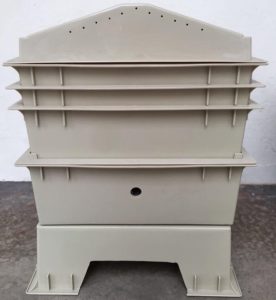
Can-O-Worms System

Worm composting system bin suitable to house blue worms and red worms

Can-O-Worms worm bin

  • Suitable for HDB, Apartments and Landed Property
  • Multi-tier system for efficient waste recycling
  • Simple to use design
  • Odorless and clean, suitable for all homes
  • Designed for easy harvesting of worm castings and worm tea (leachate)
  • Able to house up to 20,000 composting worms
  • Keeps pests and insects away
  • Awarded Australian Design Award

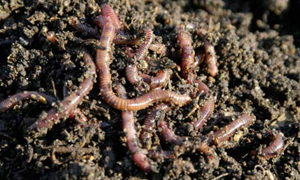
Red Worms in Worm Composting

Red worms, or Eisenia foetida, are a species of earthworms that are adapted to survive in decaying environment. This is unlike the other species of earthworms, which are more suited to live in common soil. In another words, Eisenia foetida are the species of worms most cut out for the job to produce worm castings!

So, how do red worms actually convert organic waste to castings? Red worms do so through a process known as composting. These composting worms would eat and digest the organic decaying matter that is available to them, and the ‘poo’ that is pass out is known as worm castings. Thus, you could see how easy it is to do worm composting, as the red worms would do everything for us! Our task is to provide a proper and suitable environment for the worms to live, reproduce, and thrive in.

Red worms are hermaphroditic, which means that the worm has no sexes, and each worm have both male and female organs. However, it still requires two worms to reproduce. Each pair of worms produces white cocoons that contain many eggs, which would later turn brown when a few worms hatch from their eggs. Do not worry about red worms reproducing too much, as they reproduce according to the amount of space they have. If the population is overcrowded, they will simply stop laying eggs.

Red worms’ form of defense mechanism is to produce a pungent liquid when threatened. Therefore, when roughly handled by humans, they may release this pungent liquid to ward off predators. To humans however, this pungent liquid is barely noticeable and will not cause any odor issues within the home.

Red worms are native to Europe, but have been brought to other parts of the world, including Singapore. Companies like us breed red worms for sale for people who have a heart for nature and would like to do their part in recycling.

Do contact us for more information if you would like to purchase red worms for your composting purposes.